
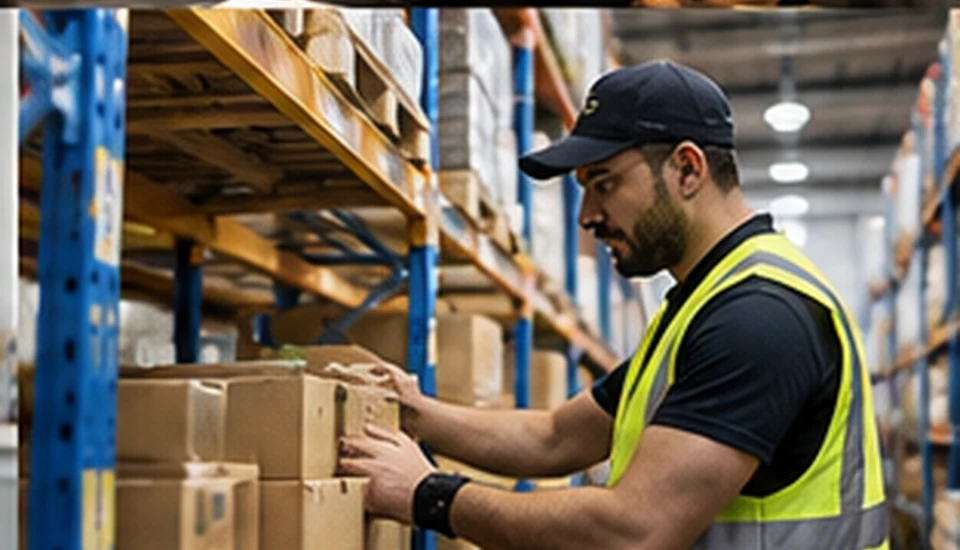
Lorry drivers, couriers, order pickers, forklift operators, freight forwarders and logistics staff move thousands of products every day without choosing what they are. Among them there are sometimes alcohol, pork or other forbidden goods. Should you refuse these loads, change roles, or is this a contribution too remote to engage your responsibility?
This guide presents scholars' positions on transporting unlawful products, the useful distinctions according to the type of role and solutions for working in logistics with peace of mind.
The carrier mentioned in the hadith
The hadith narrated by al-Tirmidhi and Ibn Maja about the ten people cursed in connection with wine expressly mentions "the one who carries it and the one to whom it is carried". This is the main textual basis for the question. Scholars deduce from it that transport forms part of the chain of the forbidden when its specific purpose is to bring the product to its consumers.
However, many jurists have stressed that this hadith refers to someone whose work consists of carrying wine as such. They distinguish this case from general haulage, where alcohol is just one item among many, unknown or marginal.
Three situations to distinguish
Specialised transport
A brewery's driver, a wine merchant's delivery driver or an employee of a spirits wholesaler carries exclusively or mainly forbidden products. For most scholars, these roles amount to direct participation and should be avoided.
General transport with known contents
A lorry driver delivering to supermarkets knows that the pallets regularly include alcohol or pork among many other products. Opinions are divided here: some scholars ask that these loads be avoided where possible, while others consider the contribution incidental as long as the main work involves lawful goods.
Transport without knowledge of the contents
A postal worker, parcel courier or freight forwarder handling sealed boxes generally has no way of knowing what is inside. The legal rule that you are only accountable for what you know applies: these jobs are widely considered lawful.
These distinctions extend the analysis presented on the page about direct participation in forbidden activities.
Warehouses and order picking
In distribution centres, order pickers receive pick lists that may include bottles or cured pork products. Several approaches can limit exposure:
- asking to be assigned to a storage area with no forbidden products (dry goods, textiles, household appliances);
- favouring goods-in, quality control or equipment maintenance roles;
- arranging pick swaps with colleagues, where the organisation allows it.
Food delivery and platforms
Bicycle and scooter couriers carry meals ordered online, sometimes accompanied by an alcoholic drink. Some self-employed couriers filter the orders they accept or avoid outlets specialising in alcohol. Self-employed status offers more room for choice here than employment.
International transport and halal logistics
For certified products, logistics plays a central role: segregating flows, cleaning containers and preventing cross-contamination. International halal standards, such as those developed under SMIIC, also cover the supply chain. This sector recruits warehouse managers, auditors and coordinators; it is presented on our page about halal logistics and the one on halal import-export.
Self-employed or employed: different room for manoeuvre
A self-employed haulier or the owner of a small delivery firm chooses their clients. They can decide not to work for alcoholic drinks wholesalers or industrial pork processors, and steer their business towards other customers. An employee of a large logistics group has less latitude: they are given their rounds and loads and cannot sort them as they wish.
This is one reason why several scholars take a more flexible approach for employees whose exposure is incidental and not chosen, while recommending that the self-employed set clear criteria for themselves. In both cases, whether the income is lawful depends on the predominant nature of the work done.
Raising your constraints at work
An employee can explain their convictions and ask for an adjustment, but the employer is not always obliged to agree if it is incompatible with how the work is organised. Refusing a task provided for in the contract can lead to disciplinary consequences. Before acting, read our page on refusing a task that conflicts with your religion.
Practical pointers
- Assess the actual share of forbidden products in your loads.
- Distinguish between what you know and what you assume.
- Look for an adjustment before considering leaving.
- Target hauliers specialising in halal food, textiles, construction or industry.
- For a specific case, present the facts to a qualified scholar.
Logistics is a sector in which most roles can be carried out lawfully; the main issue is avoiding specialising in transporting forbidden products.
The two reference lists
Sources and resources
- SMIIC: halal standards — International halal standards, including for logistics and the supply chain.
- OECD: employment — OECD studies on employment in transport and logistics.
- Your Europe: working in the EU — Employees' rights, including those of mobile workers, in the European Union.