
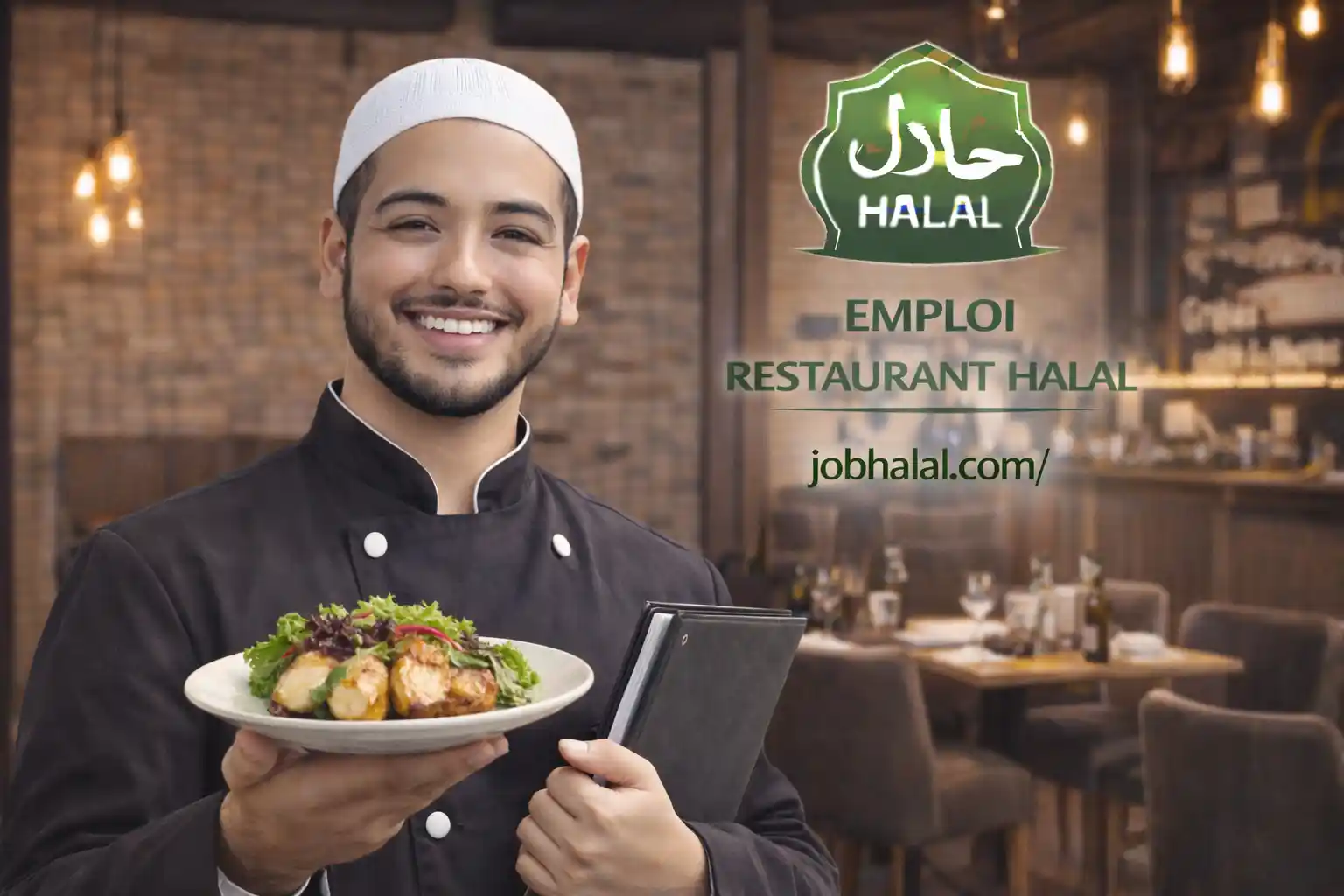
A halal restaurant is often the first job for many young Muslims, and a business venture for many others. From the neighbourhood kebab shop to fine dining, by way of burgers and North African, Turkish, Lebanese, Pakistani or Malaysian cuisine, the offer has become much more diverse. What they share: food without pork or alcohol, with meat sourced from a halal supply chain.
Working in this kind of establishment lets you pursue a career in hospitality without having to serve alcohol or prepare prohibited products. You still need to know which jobs are available, the rules specific to a halal kitchen and the steps for opening your own restaurant one day.
Jobs in halal restaurants
In the kitchen
- Kitchen assistant: basic preparation, peeling, mise en place, and washing up in small establishments.
- Cook or chef de partie: in charge of a section (grill, hot, cold, pastry).
- Head chef: designs the menu, handles purchasing, manages the team and food costs.
- Grill cook or rotisserie operator: a typical role in halal fast food.
Front of house and counter
- Waiter, station waiter, host.
- Fast-food crew member (taking orders, till, food preparation).
- Restaurant supervisor or general manager.
Around the restaurant
Delivery riders, caterers for weddings and events, cooks in contract catering offering halal menus, franchise managers and purchasing managers complete the ecosystem.
What sets a halal kitchen apart
Culinary skill is the same as anywhere else, but several rules apply day to day:
- Sourcing: meat and poultry from halal slaughter, with invoices and certificates kept on file.
- Hidden ingredients: vigilance over gelatine, certain flavourings, additives of animal origin, vinegars and sauces containing alcohol, and industrial stocks and bases.
- No pork and no alcohol: not on the menu, not in the kitchen and not in preparations (flambéing, cooking wine).
- Preventing cross-contamination: dedicated utensils, fryers and work surfaces when the establishment shares premises or suppliers with a non-halal business.
Some restaurants have their premises certified by a halal body, while others simply buy certified products. For customers and staff alike, these are not the same guarantee. A cook who can read a label, spot a questionable additive code and keep a supplier register is a real asset to the business. The page on halal quality and compliance explains how these checks are organised in industry.
Hygiene and regulation
The food safety framework is the same as for any commercial catering: European hygiene rules, a food safety management plan, HACCP, storage temperatures, traceability and allergen information. In France, a restaurant must have at least one person who has completed specific food hygiene training for commercial catering. Inspections are carried out by the veterinary services of the prefecture, and inspection results are made public. In the UK, local authorities inspect food businesses and publish food hygiene ratings.
Employment law applies in full: the sector's collective agreement, premium pay, weekly rest and breaks. An employer who shares your convictions must meet the same obligations as any other. If problems arise, the labour inspectorate remains the official point of contact.
Training and career paths
In France, the CAP in cookery, the CAP in hospitality sales and service, or the vocational baccalaureate in cookery open the doors of most establishments. Many people in fast food, however, learned on the job: it is a sector where you can start without qualifications and progress quickly. The advice on the page devoted to halal jobs without qualifications applies particularly well here.
The typical progression runs from kitchen assistant to cook, then to chef or manager. Halal fast-food chains often offer internal career paths into restaurant management, and even franchising.
Working conditions
Split shifts, evenings, weekends and bank holidays are the norm. Ramadan changes the rhythm considerably: little activity during the day, then a huge rush at the time of breaking the fast and in the evening. Employees who fast while cooking need to organise themselves (tasting dishes is a frequent question, best put to a scholar); the page on Ramadan and working hours offers guidance. Heat, standing for long periods and burns are the main physical risks.
Opening a halal restaurant
The project involves several stages:
- Market research: local competition, customer base, positioning (fast food, family, fine dining, delivery).
- Choosing premises: compliance with hygiene and accessibility standards, extraction of cooking fumes, planning permission if works are needed.
- Financing: your own contribution, and possibly interest-free or crowdfunded finance if you want to avoid conventional credit.
- Hygiene training, registering the establishment with the food authorities and registering the business.
- Selecting halal suppliers and, if you wish, applying for certification of the establishment.
For an alcohol-free restaurant, the question of an alcohol licence does not arise, which simplifies the paperwork. The business start-up side is covered in detail on the halal entrepreneurship page.
Tips for finding a job
- Drop your CV off at the restaurant in person, preferably outside service hours.
- Highlight your versatility and your availability in the evenings and at weekends.
- Show that you know the halal rules in the kitchen: this is a real plus for a serious employer.
- Check that your employment contract is declared and lawful: lawful pay also means a legal job.
The two reference lists
Sources and resources
- SMIIC – halal food committee — Technical committee that develops common halal standards for food.
- ISO — International Organization for Standardization: quality, food safety and audit standards.
- International Labour Organization — International labour standards, health and safety, conditions of employment.
- International Trade Centre — UN–WTO agency supporting exporters and international trade, including halal.