
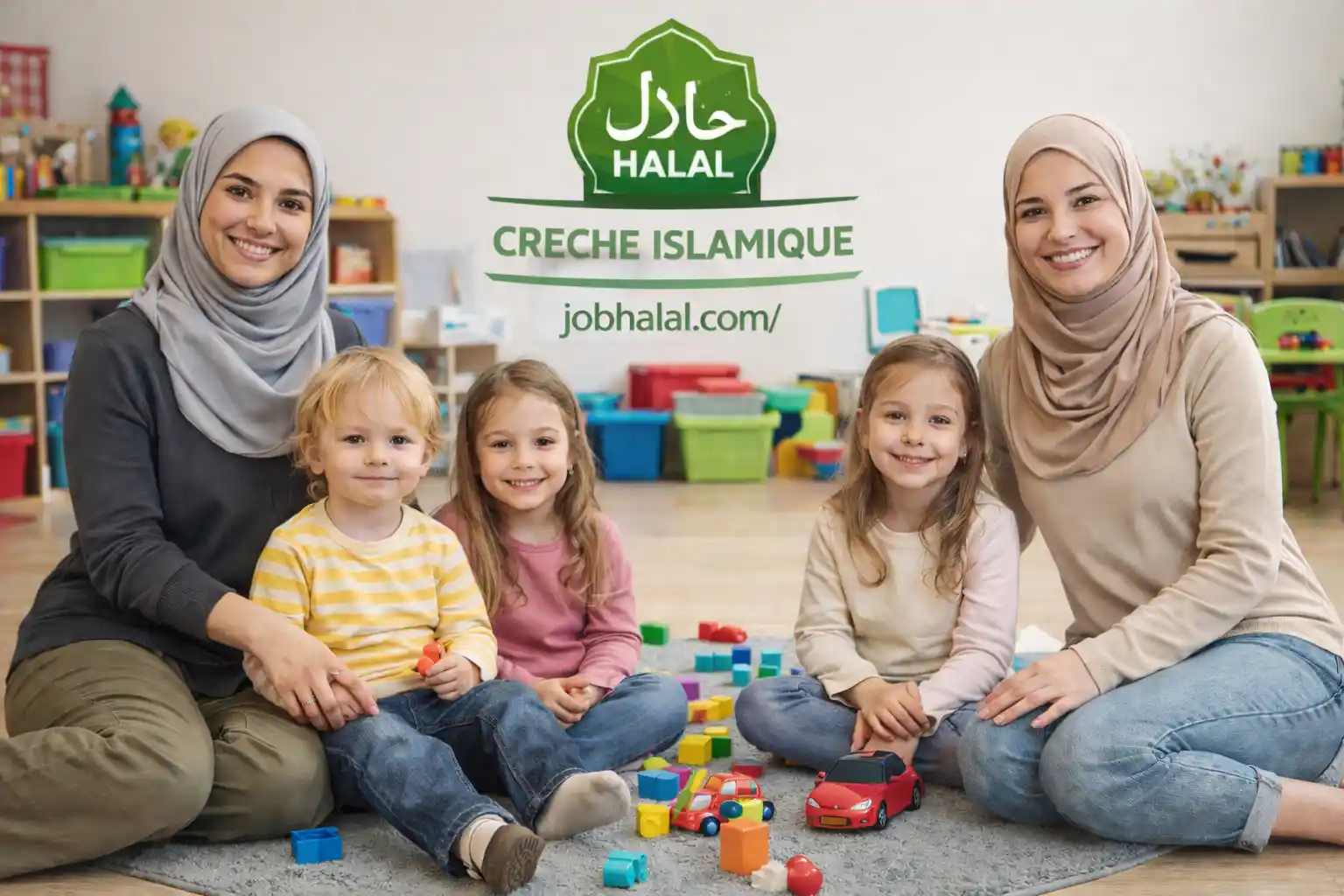
Many Muslim parents look for childcare for their young children that respects their values: halal meals, an introduction to a few religious values and a caring environment. Muslim-inspired crèches, micro-nurseries, kindergartens and nursery classes meet this demand. Working in one, or opening one, nevertheless means complying with a strict regulatory framework designed first and foremost for children's safety and development.
This guide presents early years jobs in these settings, the qualifications required and the main steps in setting up a nursery, mainly in France.
Types of childcare
Under three
In France, children can be cared for in a nursery, in a micro-nursery (a small setting) or by an approved childminder. Nurseries and micro-nurseries are classed as early childhood settings and require authorisation from the departmental council, after an opinion from the maternal and child protection services (PMI).
From three
In France, education is compulsory from the age of three. Families can choose a state school, a private school under contract or an independent private school. Muslim-inspired nursery schools are most often independent schools, subject to the rules on opening and inspecting private education.
The term "kindergarten" can refer to either of these forms, so you should always check which regime a setting operates under. In England, early years providers generally have to register with Ofsted and follow the Early Years Foundation Stage.
Early years jobs
Early years educator
Holding a vocational early years qualification, they provide daily care, meals, naps and early learning activities.
Childcare auxiliary
With a state diploma, they look after the hygiene, health and well-being of very young children, working with the educational team.
Early childhood educator
With a state diploma obtained after degree-level training, they design the educational plan, lead the team and support families. They can manage certain settings.
Paediatric nurse and management
The management of a nursery is entrusted to professionals whose qualifications are set by regulation: paediatric nurses, early childhood educators or other profiles depending on the size of the setting.
Nursery school teacher
In a school, the teacher prepares children for basic learning. For independent schools, qualification and good-character requirements apply to head teachers and teachers.
The religious dimension of the educational plan
A Muslim-inspired setting may offer halal meals, short supplications, songs without instruments, an introduction to the religious festivals or the first surahs. These elements must remain suited to the children's age and be built into a solid educational plan covering early learning, language, motor skills and socialisation. The authorities check above all the quality of care and respect for children's rights.
Religious content is a matter for the founders and families; for doctrinal questions, it is wise to rely on a qualified scholar and on trained teachers, such as those described in the guide to Islamic education.
Opening a setting: the main steps
- define the type of setting (micro-nursery, nursery, nursery school) and the educational plan;
- study local needs and funding, including possible support from the family allowance system for early childhood settings;
- find premises that meet safety, accessibility and hygiene standards;
- recruit a team that meets the qualification requirements;
- apply for authorisation from the departmental council for a nursery, or submit a declaration of opening to the competent authorities for a school;
- prepare for the opening inspections and draw up the operating rules.
The rules change: before any project, check with the department's PMI service or the education authorities. The guide to Muslim entrepreneurship helps build the business plan, and Islamic finance offers options for compliant funding.
A team's daily routine
A day in a childcare setting follows a precise rhythm: children arriving at staggered times and handovers with parents, early learning activities, a snack, quiet time, lunch, a nap, outdoor play and then home time. Every moment is a chance to observe the child's development and talk with families. In a Muslim-inspired setting, small rituals may be added, such as a supplication before meals or a nursery rhyme about the festivals, as long as they remain simple and appropriate.
Teamwork is central: regular meetings, shared observations, adjustments to the educational plan. Staff must also cope with physical tiredness, noise and the sometimes high expectations of parents. Continuing professional development, on early learning, managing emotions or safety, helps people stay the course and develop their practice.
Meals, hygiene and safety
Catering must comply with the hygiene rules that apply to institutional catering and young children. Offering halal meals means working with reliable suppliers or caterers; the principles of halal nutrition apply here, with the specific needs of very young children: allergies, textures and balanced diets.
Neutrality, dress and employees' rights
In a setting with a religious ethos, staff wearing religious symbols is generally compatible with the establishment's plan. In non-denominational private nurseries in France, the question of neutrality has given rise to nuanced case law. The guide on the hijab and religious symbols at work sets out these principles; for a specific situation, official sources and the Défenseur des droits (the French rights ombudsman) remain the reference points.
Outlook
Early years care is short of qualified professionals in many areas, which opens up real opportunities. The sector's qualifications also make it possible to work in public or voluntary sector settings. For founders, success depends on a demanding balance: a coherent religious plan, impeccable educational quality and rigorous management.
The two reference lists
Sources and resources
- ISO — International Organization for Standardization: management, quality, traceability.
- Islamic Development Bank — Multilateral institution of the OIC member countries.
- SMIIC: halal food committee — Technical committee responsible for halal food standards.